
Blog
Why Sparks Garage Door Springs Fail When It Gets Cold
Houses in Sparks mostly date 1938-2003, median 1989, and sit in a cold-severe climate band. Here's why that combination is hard on torsion springs.
How Local Conditions Play In
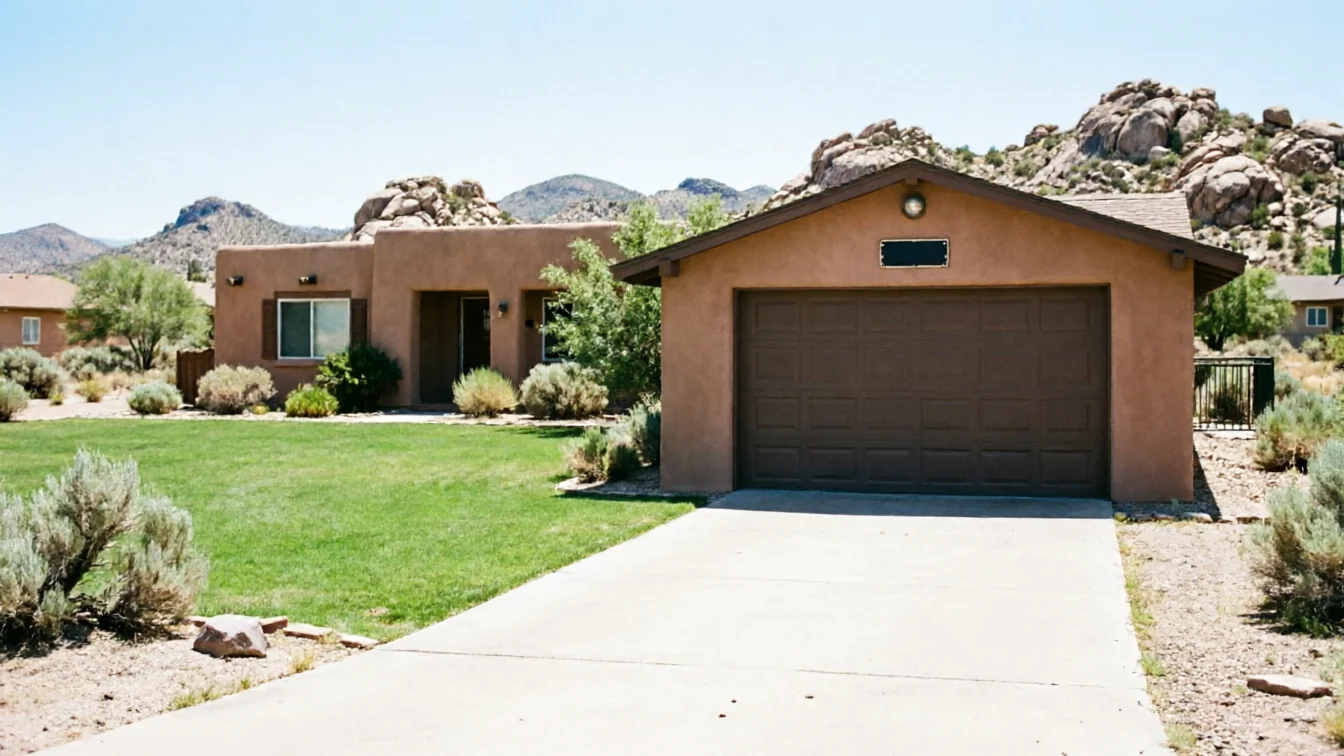
Most of the housing stock around here went up between 1938 and 2003, with the median build year landing at 1989. That means a lot of doors are still running the torsion hardware that came with the house, not a replacement. Areas like Sun Valley, four miles out, and Spanish Springs, six miles out, carry that same 1980s and 90s stock, and so does Mira Loma to the southwest. Springs don't have an expiration date stamped on them, but they do have a rated cycle count, and a 30-plus-year-old spring has usually burned through it.
This area also sits in a climate band rated cold-severe. Steel contracts in the cold, and a spring that's already fatigued from decades of winding and unwinding loses what little give it has left. That's a bad combination: old hardware plus hard cold. It's not that cold weather breaks a healthy spring out of nowhere - it's that cold weather is what finally breaks a spring that was already most of the way there.
If your house falls into that 1938-2003 build window, and especially if nobody's touched the springs since the door went in, the odds aren't in your favor once the temperature drops hard overnight.
When to Get Help
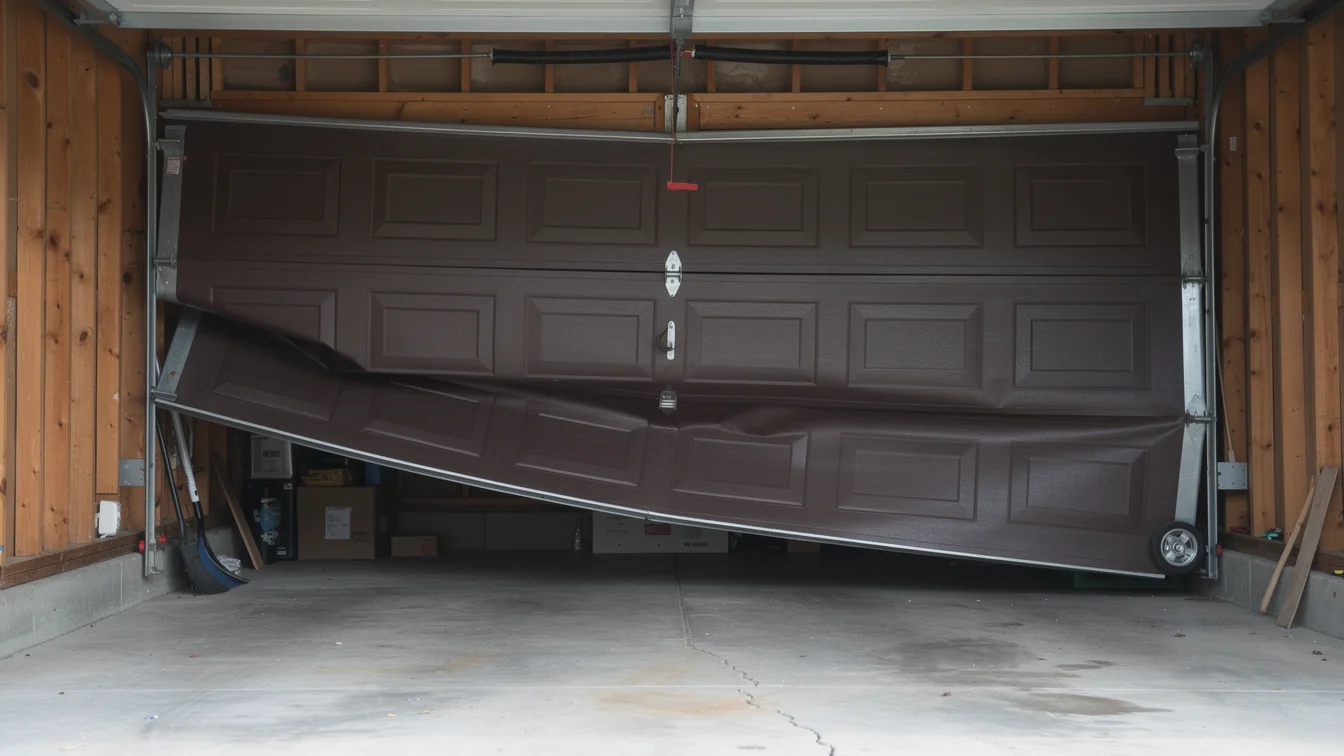
A spring on its way out usually gives you some warning before it lets go completely. The door feels heavier than it should when you lift it by hand with the opener disconnected. The opener strains, grinds, or stalls partway up. You hear a bang from the garage - that's often the spring itself snapping, not something falling. Any of those is a reason to stop using the door and call, not a reason to keep opening and closing it to see if it gets better.
A fully snapped torsion spring on a double door is a two-person job done right, and it's not safe to do yourself - the spring is under real tension and a bad release can put you in the hospital. If the door won't move at all, or only moves a few inches before stopping, leave it down and leave it alone until someone with the right bars and clamps gets there.
One limitation worth saying plainly: if your springs are original to a 1980s or 90s build, we usually recommend replacing both springs on a double door, not just the broken one. The other one is the same age and close behind. It costs more up front than a single spring, but a second failure a few months later costs more than that.
What Is Going On
A torsion spring stores energy by twisting. Every open and close cycle winds and unwinds that steel a little, and over years that adds up to metal fatigue - tiny cracks you can't see until the spring lets go all at once. Cold makes steel less flexible and more brittle, so a spring that's already fatigued from 20 or 30 years of cycles has less margin left when the temperature drops.
In a cold-severe climate band, that overnight temperature swing is routine, not rare. For a healthy, newer spring, it's not a problem. For a spring that's been doing the job since a house built in the 1980s or 90s was new, it's the difference between making it through another winter and not.
The other factor is the door itself. Houses built in this window, median year 1989, often still have the original door panel too - heavier insulated steel or an older uninsulated panel, either way adding load the spring has to carry. A spring sized right for a lighter door, or one that's lost some of its wind over time, has to work harder every single cycle. That's extra wear riding on top of the cold.
Season by Season
Early winter is when the first wave of calls tends to come in - the first real cold stretch after months of mild weather catches aging springs off guard. If your spring has been creaking or your door's felt heavy all fall, this is the stretch where that turns into a full failure.
Midwinter, once the cold has settled in for good, failures track with the hardest overnight drops. A string of especially cold nights back to back does more damage than one cold day followed by a warm one - the steel doesn't get a chance to recover.
Spring and summer are kinder to the hardware, but they're also when a lot of homeowners finally deal with a spring that's been limping along all winter instead of fully broken. If your door's been hard to lift by hand since the cold set in, warmer weather is a fine time to get ahead of it rather than wait for the next cold stretch to finish the job.
Across the roughly 11,782 owner-occupied houses in the service area, most still running original or long-overdue springs, the pattern holds every year: cold snaps bring a run of the same kind of call, concentrated in the houses from that 1938-2003 window.
Questions
Common questions
Why does my spring always seem to break on the coldest night of the year?
Cold steel is more brittle and has less give. If your spring is already fatigued from years of cycles - common in houses built in the 1980s or 90s, which make up a lot of the stock around here - the cold snap is often just the final straw, not the sole cause.
Should I replace one spring or both on a double door?
If your springs are original to a house from the 1938-2003 build range, we usually suggest replacing both even if only one broke. They're the same age and under the same wear, so the second one is typically not far behind.
Is it safe to release a broken torsion spring myself?
No. A torsion spring holds real tension even when it looks still. Releasing or installing one without the right bars and clamps can cause serious injury. Leave the door down and call for a two-person job.
Does the age of my house actually affect my garage door hardware?
Yes. Housing in this area was mostly built between 1938 and 2003, median year 1989, and a lot of that stock still has its original torsion springs and sometimes the original door panel. Older hardware carrying more load has less margin in a cold-severe climate.
Recommendation
You Might Also Like
More garage door guides for Sparks homeowners.
 What Sparks' Housing Stock Means for Your Garage Door
Sparks homes mostly date from 1938 to 2003, median 1989, built for a cold, severe climate.
 What We Actually Check on a Sparks Service Call
A look at what a Sparks garage door service call actually checks, tied to this area's 1938-2003 housing stock and severe cold climate band.
 Is Your Old Garage Door Worth Fixing, or Time to Replace It
Most Sparks homes date to 1938-2003, and the cold winters here wear out springs and seals fast.
Ready when you are
Need a garage door sorted in Sparks?
Sparks Garage Door Pros repairs and installs garage doors, springs and openers in Sparks, NV and the surrounding area.