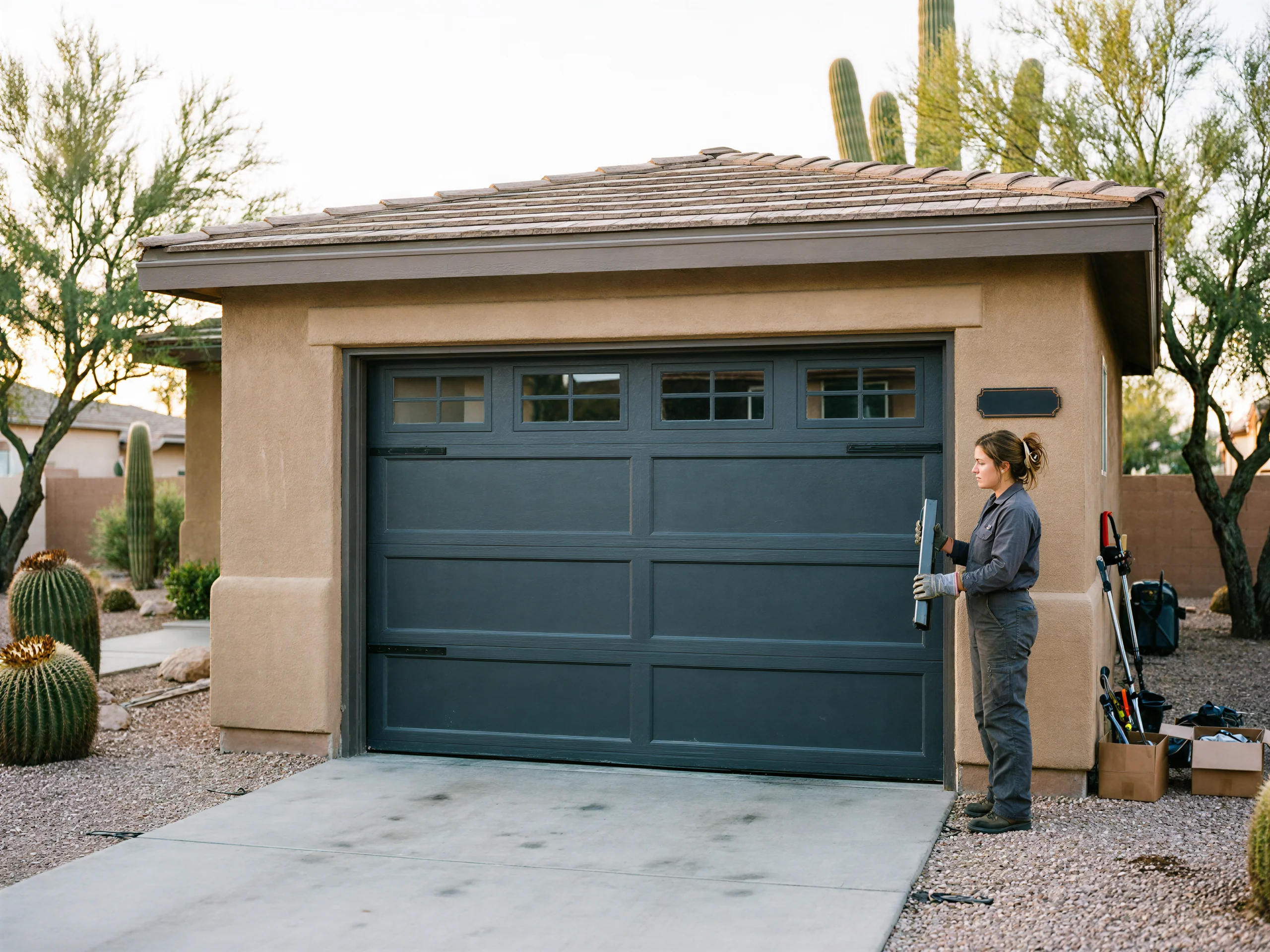
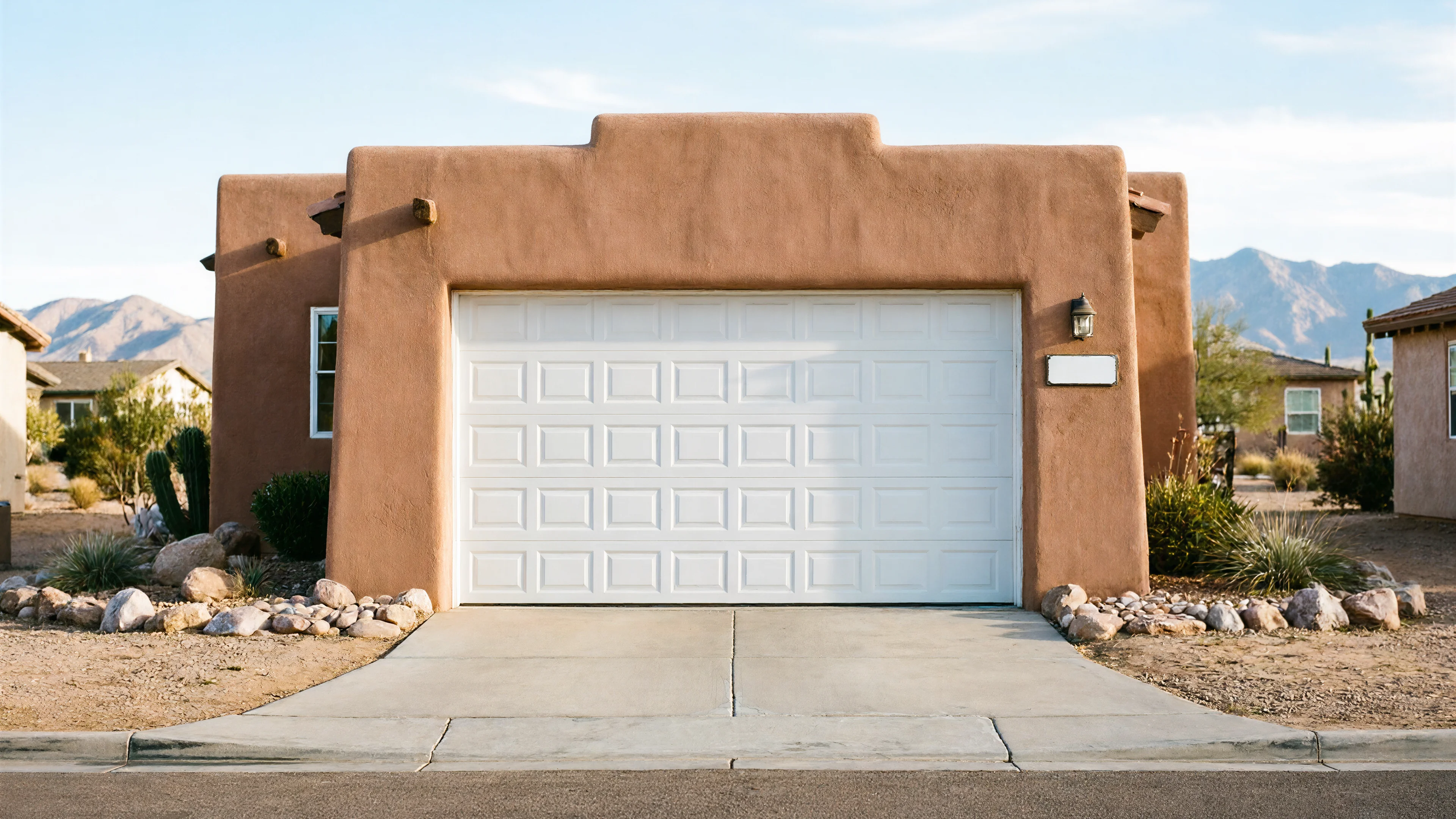
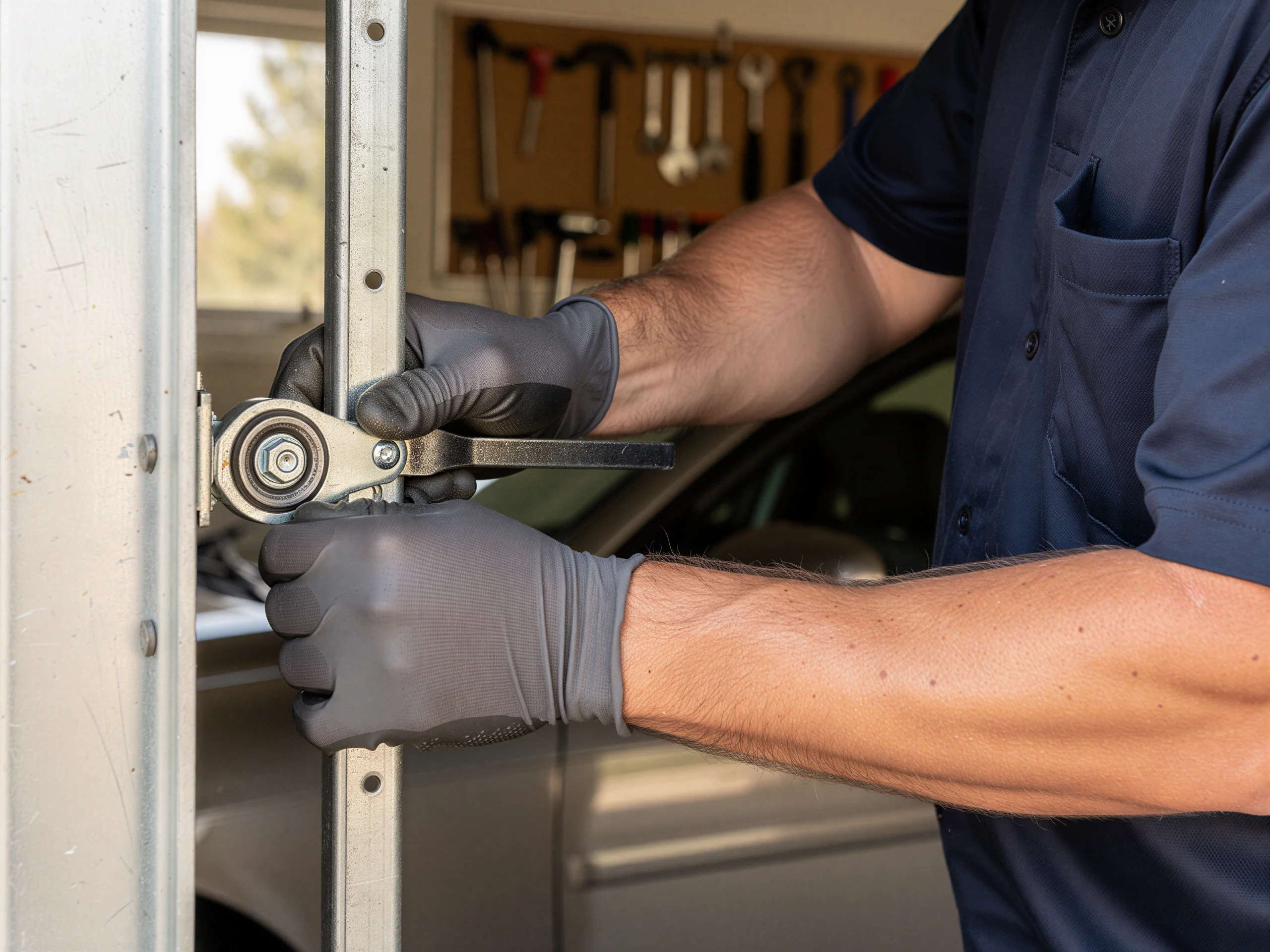
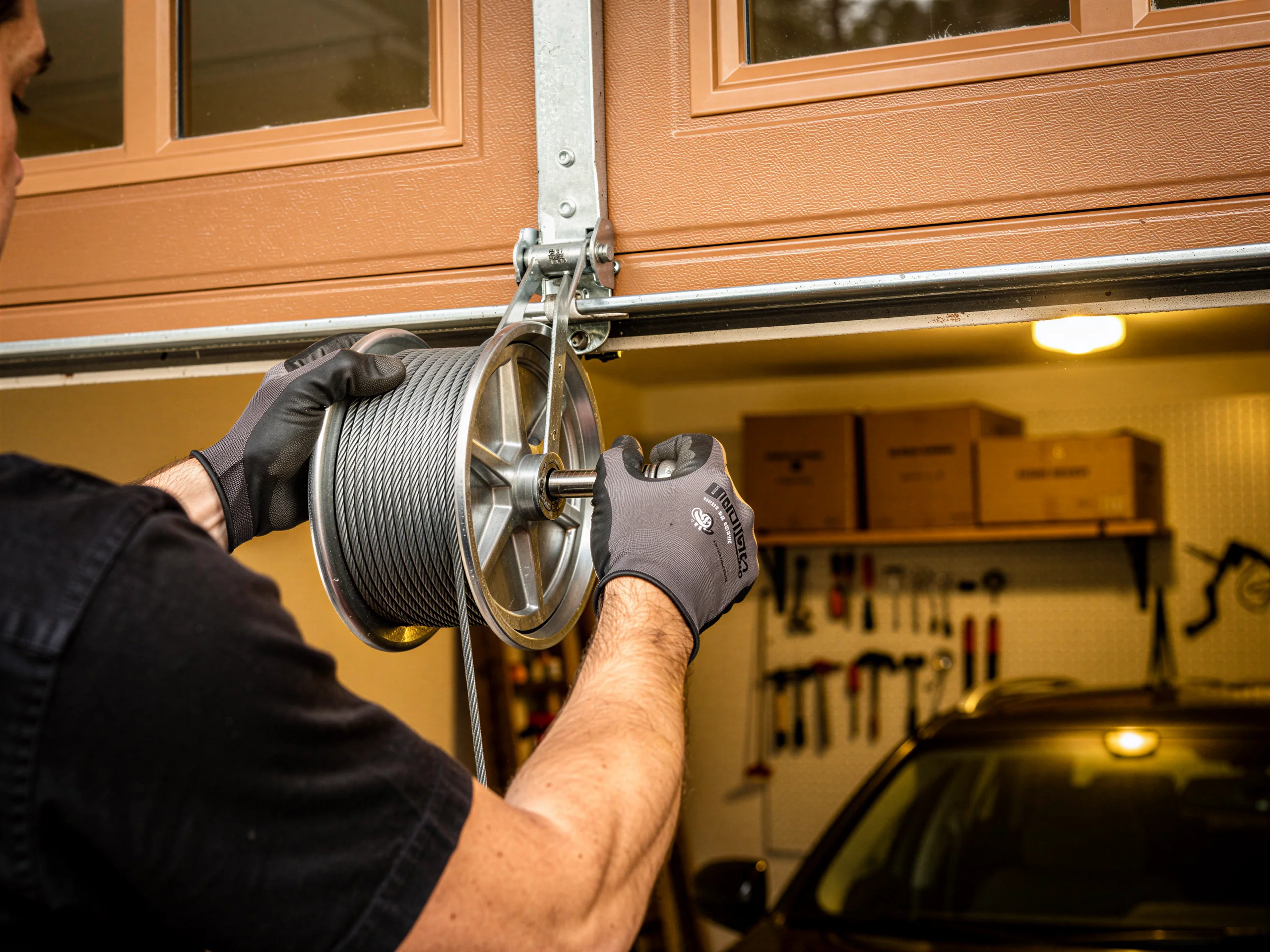
The housing stock through this area runs from 1938 up to 2003, with the typical home dating to 1989, and most of what we work on falls into that 1980s-and-90s wave across the areas we cover. Doors and openers from that build period were made to a lower standard than what's required now, and after decades of winters in a cold-severe climate band, the wood jambs around a lot of those original openings have shrunk and swelled enough times that square is more of a suggestion than a fact.
Cold-severe means real freeze-thaw cycling, not just cold air. Water gets into a seam, freezes, expands the gap, and the next thaw lets more water in. Steel doors from the original construction era don't have the thermal break current insulated doors use, so condensation forms on the inside skin and starts rust from the back, where you can't see it until a panel finally lets go. With 11,782 owner-occupied houses among the roughly 18,039 households across the area we serve, a large share of them hit this same age and exposure at close to the same time, which is why installation calls cluster by vintage more than by neighborhood.